Alphabet matching activities are an excellent approach to introduce young children to letters while keeping learning fun and engaging. Preschoolers learn faster when they participate in colorful activities rather than simply memorizing the alphabet. Matching uppercase and lowercase letters teaches youngsters to distinguish letter shapes, boost memory, strengthen fine motor abilities, and lay a solid foundation for reading.
Whether you are a parent, preschool instructor, or homeschooling educator, these free alphabet matching activities are ideal for children aged 3 to 5 This book offers printable worksheet ideas, classroom games, online learning activities, and practical recommendations to help children confidently learn the alphabet
What Are Alphabet Matching Games?
Alphabet matching games are instructional activities in which children find and pair similar letters. The most popular activity is connecting uppercase letters to their lowercase counterparts, although matching games can also incorporate pictures, beginning sounds, riddles, and flash cards.
Instead of rote memorizing, kids actively watch, compare, and answer easy matching problems. This makes alphabet learning more interesting and enhances long-term memory.
How Alphabet Matching Helps Children Learn
- Recognize uppercase and lowercase letters
- Improve visual memory
- Strengthen early literacy skills
- Develop observation and problem-solving abilities
- Build confidence through independent learning
For example:
| Uppercase | Lowercase |
|---|---|
| A | a |
| B | b |
| C | c |
| D | d |
| E | e |
By practicing these matches repeatedly, children begin recognizing letters automatically, which is an essential early reading skill.
Why Alphabet Matching Is Important for Preschoolers
Letter recognition is the first step in early literacy development. Before children can read words, they must recognize individual letters and comprehend that uppercase and lowercase versions represent the same letter. Alphabet matching activities promote numerous areas of development at once.
Builds Early Reading Readiness
Children who recognize letters easily are better prepared for phonics and reading. Matching activities help them notice differences between similar letters like b, d, p, and q.
Improves Visual Memory
Matching requires children to remember the appearance of letters while searching for their partners. This strengthens visual discrimination and memory skills.
Develops Fine Motor Skills
Many printable alphabet matching worksheets involve drawing lines, cutting, gluing, coloring, or using clothespins. These actions strengthen the muscles needed for handwriting.
Encourages Independent Learning
Matching games are simple enough for preschoolers to complete on their own. Successfully finding the correct match builds confidence and problem-solving abilities.
Benefits of Alphabet Matching Games
Here are the biggest learning benefits children gain from regular alphabet matching practice:
Educational Benefits
Improves uppercase and lowercase recognition
Strengthens phonics readiness
Develops concentration and attention span
Enhances visual discrimination
Encourages logical thinking
Supports handwriting preparation
Makes learning enjoyable through play
Research in early childhood education consistently shows that playful learning helps children stay engaged for longer periods than repetitive drills.
Uppercase and Lowercase Letter Matching
One of the most valuable alphabet activities is matching capital letters with lowercase letters. Since books use both forms, children should become comfortable recognizing each one.
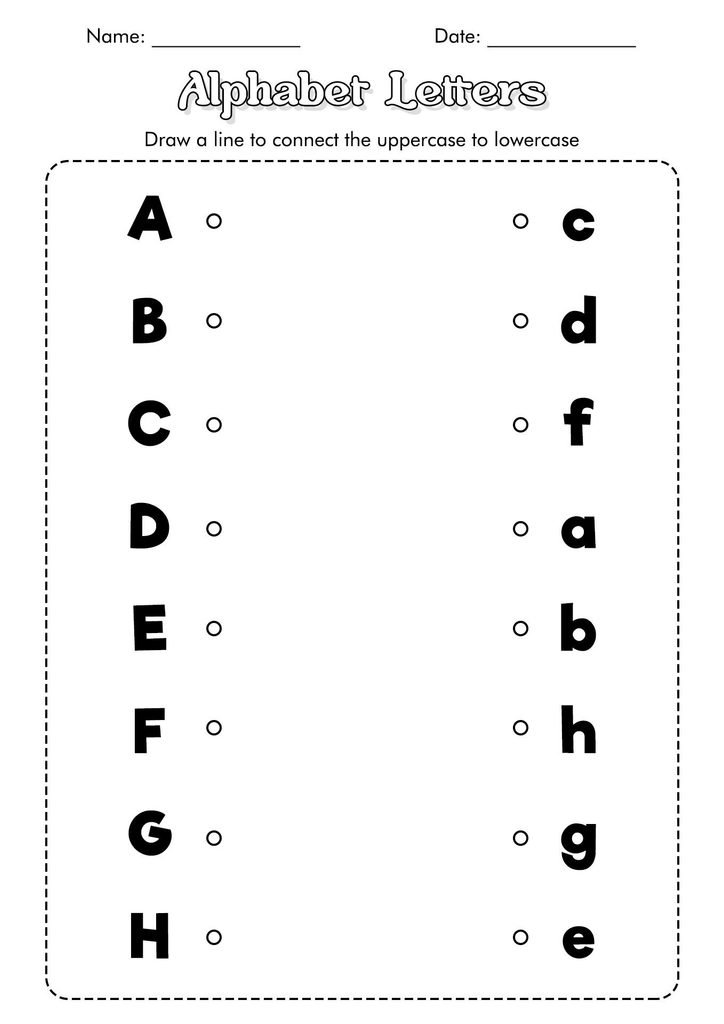
Easy Matching Activity
Give children two sets of letter cards.
Set 1: A, B, C, D, E
Set 2: a, b, c, d, e
Ask them to place each lowercase letter beneath its uppercase partner.
Medium Challenge
Shuffle all 26 uppercase and lowercase cards together. Children sort them into matching pairs independently.
Advanced Challenge
Mix letters with similar shapes such as:
- b & d
- p & q
- M & W
- n & h
This improves careful observation and reduces common letter confusion.
Different Types of Alphabet Matching Games
Keeping activities varied helps children stay interested. Try rotating these game styles throughout the week.
Letter-to-Letter Matching
The classic activity where children pair uppercase with lowercase letters.
Best for:
- Preschool
- Kindergarten
- Homeschooling
Picture-to-Letter Matching
Children identify the first sound of an object and match it with the correct letter.
Examples:
| Picture | Letter |
|---|---|
| Apple | A |
| Ball | B |
| Cat | C |
| Duck | D |
| Fish | F |
| Sun | S |
This combines alphabet recognition with early phonics.
Alphabet Puzzle Matching
Cut printable puzzles into two pieces:
- One half contains an uppercase letter.
- The second half contains its lowercase partner.
Children rebuild each puzzle by finding the correct match.
Shadow Letter Matching
Show a letter silhouette and ask children to identify the matching alphabet. This strengthens visual perception.
Free Printable Alphabet Matching Worksheets
Printable worksheets remain one of the easiest ways to practice letters at home or in preschool classrooms.
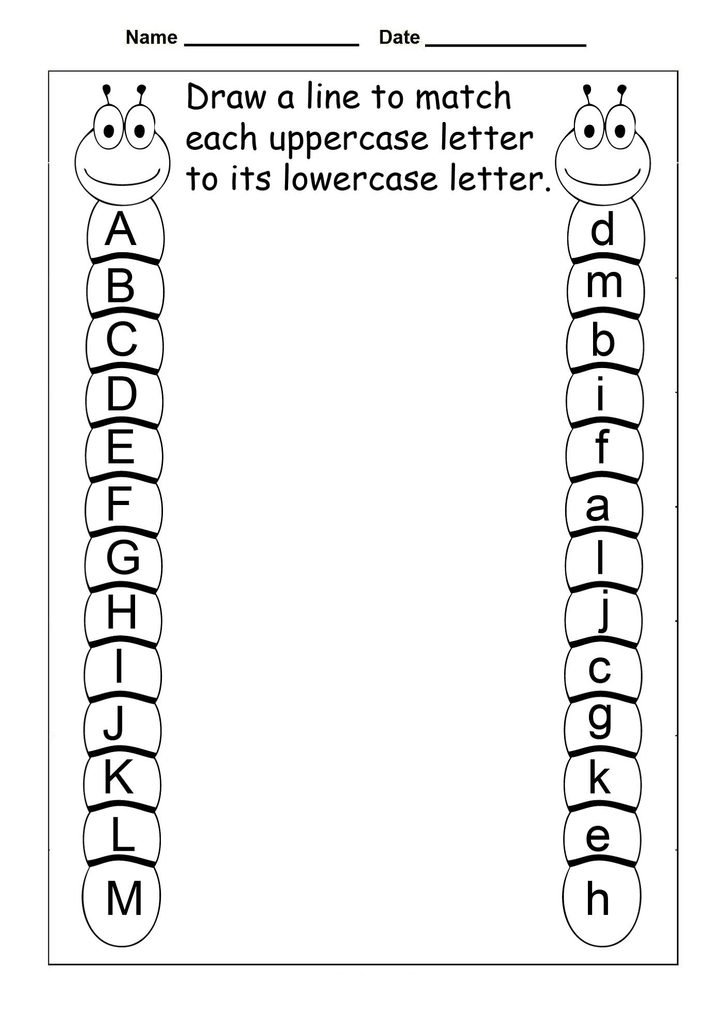
Worksheet 1 – Draw the Line
Children draw a line connecting matching uppercase and lowercase letters.
Example:
- A → a
- B → b
- C → c
Worksheet 2 – Cut and Paste
Cut out lowercase letters and glue them beneath the matching uppercase letters.
This activity improves both literacy and fine motor development.
Worksheet 3 – Circle the Correct Match
Each row includes one uppercase letter and three lowercase options.
Example:
- A → a d b
- C → o c e
- M → n w m
Children circle the correct answer.
Worksheet 4 – Color the Matching Letter
Children color only the lowercase letter that matches the uppercase example shown at the beginning of each row.
These worksheets are perfect for morning work, literacy centers, homework, and home school lessons.
Fun Alphabet Matching Games at Home
Learning letters doesn’t require expensive educational toys. Everyday household items can become effective alphabet games.
Alphabet Card Hunt
Hide alphabet cards around the room.
Ask children to:
- Find the matching lowercase letter
- Arrange letters alphabetically
- Collect only vowel letters
This adds movement and excitement to learning.
Clothespin Matching Game
Write uppercase letters on paper circles and lowercase letters on clothespins. Children clip the correct clothespin onto each circle.
Skills practiced:
- Hand strength
- Fine motor coordination
- Letter recognition
Magnetic Alphabet Match
Use refrigerator magnets to create matching challenges.
Children can:
- Match uppercase and lowercase
- Spell their names
- Sort vowels and consonants
Alphabet Memory Game
Create two sets of alphabet cards and place them face down.
Children turn over two cards at a time, searching for matching uppercase and lowercase pairs.
This develops concentration and memory while reinforcing letter recognition.
Classroom Alphabet Matching Activities
Teachers can easily organize alphabet matching into engaging learning stations.
Learning Station 1 – Letter Basket
Place uppercase letters in one basket and lowercase letters in another. Children pick one card and search for its matching partner.
Learning Station 2 – Alphabet Floor Game
Spread large uppercase letters across the classroom floor.
Call out lowercase letters, and children jump onto the matching uppercase letter.
This combines literacy with physical activity.
Learning Station 3 – Partner Match
Each student receives one letter card. Children walk around the classroom until they find the student holding their matching letter.
This encourages teamwork and communication.
Online Alphabet Matching Games for Kids
Digital alphabet games can complement printable learning when used in moderation.
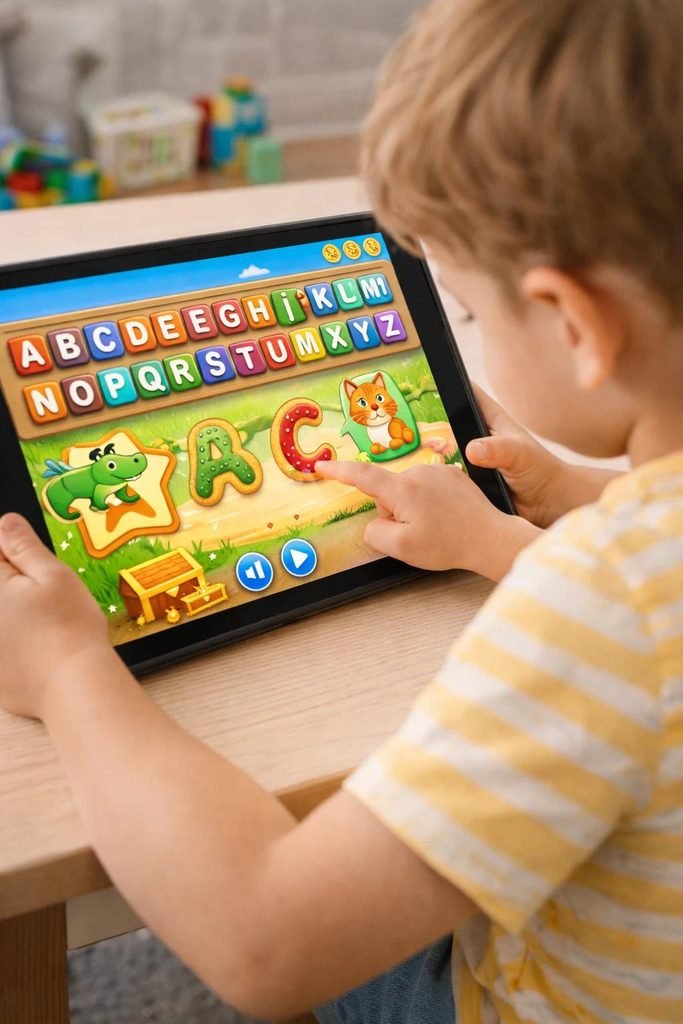
Benefits of Online Alphabet Games
- Instant feedback
- Letter pronunciation
- Bright engaging animations
- Self-paced learning
- Increased motivation
For preschoolers, short sessions of 10–20 minutes are usually more effective than extended screen time.
Combining online games with printable worksheets creates a balanced learning experience.
Alphabet Matching Activities by Theme
Themed learning makes alphabet practice even more enjoyable.
Animal Alphabet Matching
| Letter | Animal |
|---|---|
| A | Alligator |
| B | Bear |
| C | Cat |
| D | Dog |
| E | Elephant |
| F | Fox |
Children match each animal with its beginning letter.
Fruit Alphabet Matching
- A → Apple
- B → Banana
- G → Grapes
- O → Orange
- W → Watermelon
This also builds vocabulary.
Vehicle Alphabet Matching
Children match letters with transportation pictures.
Examples include:
- C → Car
- B → Bus
- T → Train
- H → Helicopter
Seasonal Alphabet Matching
Create matching cards using seasonal illustrations like pumpkins, snowmen, flowers, and beach items to keep activities fresh throughout the year.
Step-by-Step Teaching Method
Introducing all 26 letters at once can overwhelm young learners. A gradual approach produces better results.
Step 1 – Start with Five Letters
Begin with A, B, C, D, and E.
Allow children to recognize each letter confidently before adding more.
Step 2 – Practice Uppercase Recognition
Use large flashcards and say each letter aloud.
Example:
- “This is A.”
- “Can you find another A?”
Step 3 – Introduce Lowercase Letters
Place lowercase cards beside uppercase cards and encourage matching.
Step 4 – Mix All Letters
Once children become comfortable, shuffle all cards together and let them independently find matching pairs.
Daily practice of 10–15 minutes is often enough for noticeable progress.
Common Mistakes to Avoid
Avoid these common teaching mistakes to keep learning positive.
Teaching Too Many Letters at Once
Introduce small groups instead of the full alphabet immediately.
Ignoring Lowercase Letters
Most books use lowercase letters, so children should practice both forms regularly.
Long Learning Sessions
Preschool attention spans are short. Keep activities around 15 minutes for the best engagement.
Not Repeating Activities
Children learn through repetition. Rotate different matching games instead of constantly introducing new concepts.
Tips for Parents and Teachers
Helping children enjoy learning is more important than completing many worksheets.
Daily Routine Example
| Time | Activity |
|---|---|
| 10 minutes | Alphabet matching cards |
| 10 minutes | Printable worksheet |
| 10 minutes | Alphabet storybook |
Encourage Positive Feedback
Celebrate effort with phrases like:
- “Great job finding letter M!”
- “You matched all the lowercase letters!”
- “Excellent observation!”
Positive encouragement builds confidence and motivates continued learning.
Make Learning Hands-On
Try combining alphabet matching with:
- Coloring pages
- Tracing worksheets
- Fine motor activities
- Puzzles
- Flashcards
- Storybooks
Using multiple activity types helps children learn through different senses.
Conclusion
Alphabet matching games turn early literacy into a fun learning experience. Every activity, whether children are matching uppercase and lowercase letters, associating pictures with starting sounds, completing printable worksheets, or playing interactive web games, helps them develop critical reading preparation skills.
The key is consistency, not complication. A few minutes of enjoyable alphabet practice per day can boost letter recognition, focus, fine motor development, and confidence. Parents and teachers can provide meaningful learning experiences for preschoolers by combining downloadable resources with hands-on games.